Living Life On Purpose-Our Basic Motivations
Our Basic Motivations
Summary: There are seven motivational gifts listed in Romans 12:3-8. Very
few of us are characterized by only one of these gifts. Most often, each of us
has a combination of several of them. However, there will usually be one of
these gifts that is more pronounced. When we closely examine the Greek text
itself, we see that the list of gifts in Romans 12 has to do with how each of
us is made.
Scripture Reference: Romans 12:3-8
series: Living Life on Purpose
Dates: 20, August 2017 and 27, August 2017

The Apostle Paul, in Chapter 12, has
begun a series of very practical teachings on how we should live our lives
daily in order to please the Lord. In the first five verses that we covered
last week, we discovered that God has only one demand, and the demand he makes
upon us as Christians is something that God considers to be a very reasonable
demand. Of course, what God demands is that we give all that we are in service
to him and that we give our own bodies as living sacrifices to be used for the
work of God and give him glory.
Thus we are all called to be servants to
the Lord in this life. Though we may establish a sort of chain of command in
the church for the sake of governing the church administratively and
spiritually; there truly is no difference in our position in the Lord. All are
servants and there is only One Master and One Head of the Church; and that is
the Lord Jesus Christ alone.
Paul recognizes the fact that he too is
only a servant. When it comes to being a Born Again Child of God, we are all on
a level playing field. There is not one above another; no one more important
than another; and certainly, no one loved more than another.
But even though Paul knows that we are
all servants, he knows too that in the church there will be offices and positions
that will be necessary to keep the church operating in an orderly fashion. Paul
also knows that he has been given the great blessing of being in a position of
authority within the church. Paul has been called to be an Apostle, a position
that required him to teach, to lead, to establish and, at times, to discipline
other Christians who were weaker in the faith than he was.
Romans 12:3 For I say, through the grace given unto me, to every man that is
among you, not to think of himself more highly than he ought to think; but to
think soberly, according as God hath dealt to every man the measure of faith.
What does Paul mean when uses the word “grace” in this verse?
Grace, as Paul used it here, means that he has
been given an apostleship, and with that position in the church, he is also
given the authority and power to be an apostle. Because of this “grace” given to him, Paul knew that he was to command, give orders
and give instructions to other leaders in the church.
The thing that we see in the church is
that there are a lot of people who choose to take over a position and then use
that position to usurp authority, and then use that authority to act more like
a slave driver, or taskmaster. God called no one to be the leader. He is alone
is the Head of the church. No matter what your abilities, or how strong they
are seen In the church, You are still a servant, no higher or lower than anyone
else.
The special gifts to lead and teach are
not there for you to use as tools to gain power and rule with legalism. Those
special gifts, given by God, are there to help you be a better servant to the
people.
Our Basic Motivations
There are seven motivational gifts listed in Romans 12:3-8. Very
few of us are characterized by only one of these gifts. Most often, each of us
has a combination of several of them. However, there will usually be one of
these gifts that is more pronounced. When we closely examine the Greek text
itself, we see that the list of gifts in Romans 12 has to
do with how each of us is made. These gifts portray, or characterize, our basic motivations - that is,
how we perceive, understand, and approach life and ministry. These basic
characteristics are built into our personalities, placed there by our
Creator. But they are more than just personality traits. They
are gifts that our Heavenly Father has sovereignly given to each of us.
Given For God's Service
We can attempt to resist these God-given
motivations within us; or we can cooperate by putting them to service for the One who gave them
to us. It is also
possible for us to grow and strengthen these gifts. This will help us to
fulfill all of God's purposes for our lives. We can do this by continually surrendering to the Lordship of
Christ in our lives
and submitting our whole being to His use. We should walk in faith and obedience to the
Holy Spirit's leading, allowing our Lord to stretch us, discipline us, and
mature us. In this way, we can discover that entire God has made us to be
today; and, with His help, we can become all that He intends for us to become into the future.
The Seven Gifts
Let us look together at Romans 12:3-8:
v.3: "For I say, through the grace given to me, to everyone who is among you, not to think of himself more highly than he ought to think, but to think soberly, as God has dealt to each one a measure of faith. vs.4-5: "For as we have many members in one body, but all the members do not have the same function, so we, being many, are one body in Christ, and individually members of one another. v. 6a: "Having then gifts differing according to the grace that is given to us, let us use them: vs. 6b-8: "if prophecy, let us prophesy in proportion to our faith; or ministry, let us use it in our ministering; he who teaches, in teaching; he who exhorts, in exhortation; he who gives, with liberality; he who leads, with diligence; he who shows mercy, with cheerfulness"
Before we look at the specifics of the gifts
listed in verses 6b-8, there are
some crucial principles to understand. These principles are presented to us in verses 3-6a. Understanding these principles will help us clearly
grasp the importance of this list of gifts. We will also more thoroughly
appreciate and understand each person's uniqueness – yet interdependency within the Body of Christ.
1. Your "Measure of Faith" (v.3).
A. A Sober Mind
The Spirit of God, through Paul,begins this section by
exhorting us to "right thinking" concerning ourselves.Paul reminds
the church at Rome that he is an apostle ("For I say, through the
grace given to me...") and, therefore, speaks with authority
and Divine appointment. He then goes on to instruct the believers not to think
more "highly" of themselves than
they ought to. This is more than just a warning against the subtlety of pride
and selfishness. Yes, it is that; but when linked with the
rest of verse 3, it takes on even more meaning. First, we are told
to "think
soberly". This refers back to the preceding
verse, 12:2: "And do not be conformed to this world , but
be transformed by the renewing of your minds." To think soberly (v.3)
with a renewed mind (v.2) is to think with a clear mind. The Greek word used in
verse 3 is sophroneo. This word means "to be of sound
{whole, unimpaired) mind or judgment, sane, self-controlled, serious, moderate,
restrained, disciplined, able to reason." It comes from two Greek
root-words: sozo ("to save" or "saved")
and phren ("the mind").
The Holy Spirit is teaching us here that a redeemed believer is NOT to think
1) with self-conceit, that he is better than others in the Body of Christ; or2) with self-abasement, that he is less valuable than others in the Body of Christ.
BOTH ways of thinking
are equally unsound and unscriptural. Rather, we are to think with a
transformed mind characterized by true humility and gratitude to God.
B. Why Humility And Gratitude?
Humility is best defined as being exactly what you are; no more and no less. We should be grateful, because both the gifts and their proper and effective operation come from God through the power of the Holy Spirit. Truly, we are only earthly vessels- yet vessels of importance because of the priceless treasure we contain! (2 Cor 4:7). We could never acquire or obtain God's gifts by our own efforts or cleverness. And, no matter how much we desire them, we cannot have gifts other than those God has given to us. By walking in humility and gratitude, we become more balanced and more usable in the Master's hands. The basis for our transformed, sober, dear thinking is that each of us has been given a "measure of faith".
Avoid Self-Deception
Competitive behavior among believers, especially leaders, usually comes from a
lack of sober thinking. When we allow pride - or insecurity -to guide our
thinking, we become susceptible to deception and sin. Any person can be tempted
to covet another person's gift, or to be insecure about his or her own gifts.
Only constant vigilance over our hearts (Prov 4:23)-and regular times of examination and cleansing by the Holy Spirit-can keep us from falling victim to the self-deception of pride on the one hand, or false modesty on the other.
C. What Is A "Measure Of Faith"?
Let us define "measure of faith" -what it is and what it is not:
1. This "measure of faith" is NOT "saving faith" (the kind of faith that is concerned with our salvation). No person can be "more saved" than You are either saved, or you are not. The presence of a gift, or its use, does NOT mean that one person has more saving faith than another.
2. This "measure of faith" is NOT an amount of faith, Faith is not divided into pieces by God and handed out in larger or smaller amounts to different people. It is also NOT about trying to become more "spiritual" so you can have a larger amount of faith, or more gifts.
3. This "measure of faith" IS that type of faith that is best suited for the operation of each particular gift in its area of. In other words, someone who has the gift of giving needs the type of faith that will release him to give liberally, without holding back. A teacher needs the type of faith that will enable him to boldly stand before others and rightly present the truth. Father God has made each of us in a certain way, with certain gifts. He has also given us the type of faith needed to best use our gifts.
D. Thinking Soberly
With that in mind, the exhortation regarding sober thinking takes on even greater impact. If we think we possess gifts that we have not been given (or strive to get them!), we have an inflated notion of ourselves. We sin by thinking too highly (or just plain wrongly) about ourselves and what God has given to us. But if we underestimate what God has placed in our lives, we are enslaved to a false humility that seems to be very spiritual but is not spiritual at all (Col 2:23). We will doubt or deny the gifts God has given us, and never rise up and fully use those gifts. Thus, all that God could accomplish through our lives will go unfulfilled, and the Body of Christ will never receive all that we could give.
E. Stay Within Your Gift
There is another important lesson to learn about sober thinking: When you have
been given a certain Motivational Gift, be content to use that gift instead of
longing for other gifts. It is a wise person who stays within the sphere of
service that God has equipped him for, and avoids doing something for which he
is not equipped. The quickest way to become frustrated and hopeless in ministry
is to try and function in an area of service where you are not equipped to
function!
F. Uniqueness of the Motivational Gifts
It is important to remember the uniqueness
of the Motivational Gifts.
- They are not like the Manifestation Gifts of I Corinthians 12, where any believer can function in any of those gifts as the Holy Spirit leads.
- Nor are these gifts like the Ministry Gifts of Ephesians 4:11.
- The Motivational Gifts involve who God has made us to be.
These gifts will influence how we perceive life, and how
we respond to other people's needs in a given ministry situation.
Each of us,
with our unique motivational gifts, will respond to a situation somewhat
differently than others who have other gifts. The important thing is that each gift
is just as important as the other gifts. And ALL the gifts are equally important for effective
and complete ministry.
G. Our Value
The kinds of gifts we have do not determine our value to the Body of Christ,
nor to God. For we all belong to one Body, and need each other's different
gifts to function correctly. We all belong to God because we have all been
created in His image and purchased by the blood of His Son. These facts
establish forever our personal worth and value.
- Our worth is not based upon the kind
of gifts we have, or the size of our ministry.
- Each person is valuable to God and to
His Kingdom just as He has created him or her.
- Let us discard all prideful posturing
and striving. Instead, let us with praise-filled hearts embrace all the
Father has chosen to give to each one of us!
2. We Are One Body (Rom 12:4,5)
Paul's comments here are shorter than in 1 Corinthians 12, but the meaning is
the same. In verse 3 Paul writes, "God has allotted to each
a [different] measure of faith". Here in verses
4,5 the Holy Spirit uses the illustration of the human body to recombine
these different measures of faith. As each human body has many different
members, each with its own particular function, so does the one Body of Christ.
Two
important principles emerge from verses 4 and 5:
A. "We are ONE Body in Christ."
We each belong to Christ's Body. We do not belong to just ourselves. Therefore
to despise, criticize, or be judgmental of another part of the Body denies and
hinders the different functions God intended for His Church. He made each of us
unique and different! There are no lesser gifts or persons!
Because we are all members of His Body, we should treat each other with the
kind of care and respect that would please the Lord.
B. "We are Members of One Another."
Believers are members not only of One Body, but also of each other. This means
we are mutually interdependent. The Body can function properly only when each
member does its part. Therefore, it is very important for each member/ gift/
function to be recognized. Each one should be taught and encouraged to minister
in the Body. The differences within the Body enrich all other members, as each
member accepts the full expression of each gift God has given to the Body of
Christ.
With these principles in mind, let us now examine in
detail the seven Motivational Gifts listed in Romans 12:6-8. As we look at each
gift, we will discuss:
1. characteristics of each gift, and
2. scriptural examples of each gift
THE MOTIVATIONAL GIFT OF PROPHECY
v.6 - Perceiver- Ongoing Insight
A person with the Motivational Gift of Prophecy could
also be called a "perceptive" person. That is someone who sees and
understands the deeper meaning of a situation. We are not talking about revelation, that is, seeing something never seen before. We are
talking about having the light of the Word of God and the Spirit of God giving
holy illumination to the mind of the person in order to reveal the truth of a
situation. This Motivational Gift is characterized by the ability to:
1. see or perceive beyond surface appearances;
2. receive and declare truth about a situation;
3. receive and declare insight about people or programs.
This creative gift from our Heavenly Father gives a
believer the ability to see situations and people with ongoing prophetic
insight. This gift (like the rest of the gifts listed in Romans 12) functions
independent of any public ministry or position. In other words, someone with
the Motivational Gift of Prophecy is NOT the same as someone with the Ministry
Gift of Prophet.
For The Church's Benefit
As with any gift, the Motivational Gift of Prophecy can
be used in a helpful and beneficial way -or it can be twisted and used to hurt.
It is given by God and intended to be used for His glory and the Church's
benefit. This gift can motivate a person to want
to:
1. repair broken relationships in the Body of Christ;
2. improve or build up a person's walk with God.
Persons with this gift will desire to "cut to the heart of a matter" - whether it is a problem between people,
or a spiritual challenge in the church. They will often desire to speak out the
truth they perceive, whether it is to an individual or a whole congregation. It
is very important to remember, however, that having the Motivational Gift of
Prophecy does not necessarily make you a prophet. Sometimes a person motivated
by this gift may also be a teacher with unusual insight in a local assembly. Or
that person may be a good counselor. Yet it is possible, even likely, that a
person with the Motivational Gift of Prophecy will often be used prophetically (l Cor. 12:10) by the Spirit of God. He may even have the Ministry
Gift of Prophet (Eph.
4:11).
Persons with this Motivational Gift tend to be very "clear-cut" in their approach. To them, something is
either true or right -or it is false and wrong; there is no "middle ground", and there are no exceptions. Persons with
this Motivational Gift need to seek the balance of learning to be merciful and
gentle as they seek to exhort, correct, instruct and warn others.
Proper Use Of This Gift
Verse 6 uses the phrase "in proportion to their faith." This sounds like the "measure of faith" spoken of in verse 3, yet it is different. "Measure of faith" has to do with having sober
judgment (v.3) regarding the place or sphere of influence that our Motivational Gifts give
to each of us "In
proportion to our faith" refers to the proper usage of the prophetic gifting.
The Greek word for proportion is analogi, used to describe mathematical limits. In relation to this gift, analogi means two things:
1. The person who is prophetically gifted in speaking God's word must not go beyond that which God has given him to speak.2. This same person must not withhold, or give less than, the full truth as God shows it to him.
The proper use of every gift of God requires us to be
responsible, and to use it correctly. Those who have the Motivational Gift of
Prophecy must use their words very carefully. They should not say more
or less than God has given them to say. It should be said as well that,
EVERYTHING SPOKEN FROM A PROPHETIC BASIS MUST BE JUDGED AND COMPARED TO GOD'S WRITTEN WORD, THE BIBLE.
A prophetic word should never disagree with what is already in the Bible. Both the
person who hears the prophetic word and the person who speaks with prophetic
insight should do this comparison. It is very important for a person with this
gift to make very certain that what he perceives is from God's Spirit -not from
his own spirit, or a demonic influence! It is not always easy to distinguish
between God's Spirit speaking and our own spirit or even an evil spirit
speaking to us. A person who is young in the Lord might become confused and
make mistakes. One must humbly admit to those mistakes, and carefully submit to
God in prayer and the study of His Word (2 Pet 3:15-18).
Points Of Caution
This
Motivational Gift most often focuses on things that are wrong. Therefore, if
you have this gift, you must be careful to not dwell on the negative. You
should also be careful to judge the sin, NOT the person caught in the sin.
One
should speak with respect and sensitivity, so as not to offend people so badly
that they miss what God wants to say to them.
A Scriptural Example Of Prophetic: Gifting
John
the Baptist was truly a man gifted with the Ministry Gift of Prophet. His gifting
and ministry form a "bridge" between the ministries of the Old
Testament prophets and those of the New Testament prophets. John the Baptist's
primary calling was fulfilled through the Ministry Gift of a Prophet (Eph
4:11).
However, his life and ministry can also give us some insight into the function of the Motivational Gift of the prophetic:
However, his life and ministry can also give us some insight into the function of the Motivational Gift of the prophetic:
1. His unconventional dress (Matt 3:4) shows that he was not concerned about external appearance
2. He was aware of his personal unworthiness (Luke 3:16). People with a prophetic gift tend to be hard on themselves.
3. He knew he was only a voice for God. His ministry was completely scripturally based, as we can see in Luke 3:3-6.
4. He was frank and direct in confronting the crowd with their sin, warning them of judgment, and exhorting them to repent (Luke 3:7-9).
5. He did not dwell on the negative. When people from the crowd asked, "What shall we do then?" he told them the positive steps they could take to turn from their sin (Luke 3:10-14).
6. He looked for repentance, that is, a change in lifestyle in people (Luke 3:8).
7. He placed great emphasis on right (good) and wrong (evil) (Luke 3:10-14) and openly rebuked evil in those in authority (Luke 3:19).
8. He discerned people's motives (Luke 3:7).
THE MOTIVATIONAL GIFT OF MINISTRY (Serving)
V.7 - Server - A Spirit Of Servanthood
The Greek word used for "ministry" is diakonia. This is one of the Greek words used for "servant". Some would limit the use of this word to only that ministry or service done by a deacon (which is derived from diakonia). 'This is not an unreasonable interpretation.
However, this word is used in Scripture in a much wider application. Diakonia almost always appears in the New Testament in connection with the service of, and in, the Christian Church.
It
is used in the following ways in the New Testament:
1. Service in general, meaning all works of service and ministry done for the good of the Body of Christ (Eph 4:12).
2. As the apostolic ministry and the ministering of the Word (Acts 6:4;20:24).
3. In the office of deacon and its areas of service and ministry (Acts 6:1-3).
Some are especially gifted in the area of service. They are fulfilled when they are serving the needs of others impractical ways. But there is an important lesson to be learned here, regardless of your giftings. The above scriptures imply -and many others specifically state -that everything we do and are as Christians, and especially leaders, is to be marked by a spirit of servanthood.
No matter what your God-given gifts are, or the extent of
the ministry God has given you, you are not greater than the Lord of
the Church. (John 15:20). Everything we do is in service to Him, and to His
Church. If you desire to be conformed into His image -He Who gave His life for
us -your life and ministry should be characterized by a Christ-like, servant's
heart (Matt 20:20-28).
Task-Oriented
Serving is one of the Motivational Gifts that God the
Father gives to us at our creation, our birth. Serving focuses on the giving
of practical assistance and help. Those who have the gift of
Ministry (service) will often have the ability to identify an unmet need in the
Body. They will desire to move in and do what needs to be done to meet that
need. They will demonstrate God's love by meeting practical needs and giving
"hands-on" service and assistance. You will often find these people
helping the poor and infirm. Those with the Gift of Ministry will often be
gifted with their hands and have physical stamina. The Gift of
Ministry is task-oriented.
The Honor Of Serving
This Motivational Gift of Serving is often underestimated
and regarded as "unspiritual". Because it is often focused on
material and physical benefits, many look down upon those who minister in this
way as less important. Thus, the gift of serving is often neglected and not
honored in the Body of Christ. But remember, it was Jesus Himself - the
ultimate Servant - Who was humble enough to serve others by washing their feet
(John 13:3-17).
Also, the qualifications for deacon in 1 Timothy 3:8-13
require these "servers" to be people of Christ-like and worthy character.
And when the apostles first instituted the office of deacon, they specifically
sought out people of "good reputation, full of the Holy Spirit and
wisdom" (Acts 6:1-7). These verses prove that being a servant is
NOT a lowly thing in God's Kingdom! Maybe the world of fleshly, unspiritual men
sees a servant as "lowly", but a servant is most certainly NOT lowly
in God's eyes (see Matthew 25:34-40).
From a wrong, fleshly human perspective, this gift can be
viewed as not very important. If this wrong perspective is believed, the person
with the Motivational Gift of Service might view himself as unimportant and so
deny the good gift God has given him for the Church. If service is not
considered important, then the person will want to grab for other gifts
that appear to be more "glorious" and more
"important" This wrong thinking and neglect of the gift of service
leaves an empty place in what should be a well rounded and balanced ministry in
and to the Body. It will also leave the person with this gift both empty and
frustrated, trying vainly to find a release of ministry outside what God has
gifted him for. If we leave ailing members of the Body uncared for because of a
lack of this servant gift, our testimony in our local communities is damaged.
It can even invalidate the Gospel message in the minds of unbelievers when they
see us not serving and caring for our own members.
A Good Standing
The ministry of the Server is both valuable and truly
spiritual, and an important part of the Church's witness. The Server should
devote himself to this ministry with joy and confidence, for "those
who have served well as deacons obtain for themselves a good
standing and great boldness in the faith which is in Christ Jesus" (1
Tim 3:13).
A Scriptural Example Of Ministry (Serving) Gifting
Martha is an example of someone with the Motivational
Gift of Ministry (service). Luke 10:38-42 and John 12:2 show both the positive
and potential negative outcomes of this gift:
1. Servers find fulfillment through deeds rather than
2. "Martha served." Servers have a tendency to prefer to do things
3. Servers are generally neither organizers nor They are better at following directions.
4. "Martha was distracted with much " Servers often get too involved and troubled about things. Also they find it hard to say "no" to new tasks (Luke 10:40-41).
5. Servers may get so busy serving that they could potentially neglect their spiritual life (Luke 10:42).
6. But… Servers are important, and are required for any church to function!!!
THE MOTIVATIONAL GIFT OF TEACHING
v.7 - Teacher- Imparters
Of Truth
This creative gift focuses on the understanding. Believers
with this gift will seek to clarify truth and doctrine, expounding upon the
meaning and practical application of the truth. They will desire to impart
knowledge and lead others into understanding the truth. To
search out and validate truth will be as meaningful to those motivated by this
gift as the actual imparting of it to others (1 Tim 5:17).
Needed In The Church - And The World
Some believers feel that being a teacher is a lesser gift
and not to be desired. Yet how many of us have learned something valuable from
a teacher? You are able to read this magazine because someone taught you how!
It is seldom that the world notices who the teachers are; but often much of
civilization depends on what teachers do and say. Jesus Christ, the Lord of the
Church and the greatest Teacher of all, has given this gift to us because the
Church needs it -you and I need it! In God's Kingdom, there are no lesser gifts
or little people.
A Scriptural Example Of The Teaching Gift
Apollos is an excellent example of the Motivational Gift of Teaching (Acts 18:24-28; 1 Cor 3:6):1. The teacher "waters" (1 Cor 3:6) - that is, helps the Church (believers) to grow.
2. Apollos was "an eloquent man," that is, gifted as a speaker.
3. Apollos was "mighty in the Scriptures." Teachers should base their instruction on the Scriptures, including their examples or illustrations.
4. Apollos "spoke and taught accurately the things of the Lord." Teachers are generally objective, and will thoroughly research a subject before speaking on it.
5. Apollos was instructed "more accurately" by Aquila and Scripture says that teachers should also be teachable.
6. Apollos "greatly helped those who had believed through" Teachers provide the substance (the foundational Scriptures) on which experience can be placed and made permanent. Experiences, by themselves, can pass away; experience based in the Word is permanent.
THE MOTIVATIONAL GIFT OF EXHORTING
v.8 - Exhorter- Sons
Of Encouragement
As teaching is directed to the understanding, exhortation
is directed at the heart, conscience and will. This gifting, working through a
believer, will cause him to urge others to their full spiritual maturity. The
operation of this gift is often directed toward those who are in difficult
circumstances and suffering affliction.
The Motivational Gift of Exhortation works well in partnership with other gifts, such as teaching, and the prophetic and apostolic ministry gifts (l Tim 4:13; Titus 1:9; 1 Cor 14:3; Acts 4:36). An exhorter will arouse and motivate both individual believers and the Church as a whole to patient endurance, brotherly love, and good works (Heb 3:13; 10:23-25). Exhorters will have a great ability to stimulate the faith and personal growth of others.
The Motivational Gift of Exhortation works well in partnership with other gifts, such as teaching, and the prophetic and apostolic ministry gifts (l Tim 4:13; Titus 1:9; 1 Cor 14:3; Acts 4:36). An exhorter will arouse and motivate both individual believers and the Church as a whole to patient endurance, brotherly love, and good works (Heb 3:13; 10:23-25). Exhorters will have a great ability to stimulate the faith and personal growth of others.
A Scriptural Example Of The Exhorting Gift
Barnabas
is an outstanding portrayal of the exhorting gift, and of how that gift worked
in partnership with his apostleship:
1. "Barnabas'' means "son of encouragement or consolation"(Acts 4:36).
2. Exhorters have an encouraging message, that is, to follow the Lord purposefully (Acts 11:22-24).
3. The exhorter's message strengthens the souls of the believers and urges them to continue in the faith (Acts 14:20-22).
4. Exhorters are generally positive about people and do not easily give up on them -even when others have (Acts 9:26,27).
5. Exhorters have an ability to discern where people are in their spiritual growth and to speak to them on that level (Acts 11:22-24).
6. It is important for an exhorter to maintain a positive attitude.
7. If Barnabas had not exhorted the apostles to accept Saul (Paul), or exhorted Paul to accept Mark, almost half of the New Testament -the Gospel of Mark and the Epistles of Paul –might never have been written! (See Acts 15:37-39 and 2 Timothy 4:11).
THE MOTIVATIONAL GIFT OF GIVING
V.8- The Giver- A Deep Desire
This gift involves a special ability - and desire -to share material
assistance. The giving being discussed here is of personal resource -NOT the
distribution out of the treasury of the Church. You do NOT have to be wealthy
to have this gift. However, it does seem that those with this motivational gift
have often been blessed with abundant resource. It seems the more they give,
the more they have! They also seem to have the corresponding abilities to
accumulate, handle and distribute assets. They will give out of a deep desire o
see the needs of God's work met and the ministry of others succeed. All
believers, especially the leaders of a church or ministry, should tithe and
give offerings. But those with the special Gift of Giving will give with
extraordinary liberality -even when in poverty and affliction (Mark 12:41-44).
Purity Of Motive
The word "simplicity" (or
"liberality" in some translations) comes from the Greek word laplotetes. This
term sometimes means "liberality" in Scripture. But here it means
single-mindedness of heart, a purity of motive or purpose. Since the giving
involves personal resource, the giver should NEVER have a selfish motive.
Sometimes the wealthy will make a donation expecting to gain influence or
advantage for himself or herself. The ruling elders or senior pastor should
never allow this (see James Chapter 2). If such a motive is suspected, those in
leadership should make clear to the giver that there will be no advantage
allowed him. If the person giving the gift does not understand or agree, the
gift should be refused. God will provide for your needs another way. [For an
example of how God feels about impure motives in giving, see Ananias and
Sapphira in Acts 5:1-11.]
A Scriptural Example Of The Giver
The life of Abraham provides us with some insights as to
the functioning of this gift:
1. Givers may be entrusted by God with many assets (Gen 13:1,2).
2. Givers are of a generous and liberal spirit (Gen 13:9, 10).
3. Givers can be very aggressive and resourceful in the protection of their assets (Gen 14:14-16).
4. Givers recognize God's work and causes, and are responsive (Gen 14:18-20 -Melchizedek and tithing).
5. Givers have a firm knowledge that God is the source of their wealth, and give Him the glory (Gen 14:22-24).
6. God puts givers in the right place at the right
THE MOTIVATIONAL GIFT OF LEADING
v.8 - The Leader - Servant-Leadership
The Greek word for "rules" (or "leads") is ho
proistemi . It means literally "he that is placed in front,"
indicating a position of both authority and responsibility. Both of these go
hand-in-hand in God's Kingdom and are tempered by a servant's heart.
The "leading'' described by this word is NOT to be mistaken for simple management. Nor does it describe a gift that puts the person into a prominent public ministry. Rather, it strongly indicates a requirement to lead for the good of the Body with a sense of personal responsibility. Hence, the exhortation to "lead with diligence". The word translated as "diligence" means "prompt efficiency", "without delay", "a holy haste or zeal". All of this requires self-discipline and vigilance as to the condition of the flock.
The "leading'' described by this word is NOT to be mistaken for simple management. Nor does it describe a gift that puts the person into a prominent public ministry. Rather, it strongly indicates a requirement to lead for the good of the Body with a sense of personal responsibility. Hence, the exhortation to "lead with diligence". The word translated as "diligence" means "prompt efficiency", "without delay", "a holy haste or zeal". All of this requires self-discipline and vigilance as to the condition of the flock.
Partnering With Others
Paul's description of the Gift of Leading seems most
likely to refer to those who hold (l Thess. 5:12) or aspire to (l Tim 3:1) the
office of Elder. However, this Motivational Gift functions in partnership with
many of the other Ministry Gifts - such as apostle, prophet, pastor and teacher.
Those who have this gift will lead by working with and through others. They
will often get the job done by organizing and delegating responsibilities and
authority to others. A leader will define the tasks and provide leadership
support and guidance - while releasing others to partner in accomplishing the
goal.
A Scriptural Example Of The Gift Of Leader
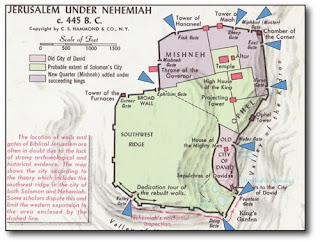
Nehemiah
serves as an example of superb leadership skills and heart motivation:
1. Leaders have a special feel for the cause of God's people (Neh. 1:1-4).
2. Leaders have the ability to survey and define what needs to be done (Neh. 2:12-17).
3. Leaders have the ability to break down major goals into smaller achievable tasks (Neh. 3:1-32).
4. Leaders can take pressure and opposition and still proceed (Neh. 4:1-23).
5. Leaders make things "easy" for others and are not a personal burden (Neh. 5:14-19).
6. Leaders know how to delegate the authority needed to accomplish the responsibility given (Neh. 7:1-2).
THE MOTIVATIONAL GIFT OF MERCY
v.8- Mercy Shower Compassion
This gift is similar in some ways to the Motivational
Gift of Giver. However, the word "mercy" denotes a more direct, personal ministry
to those in need. Believers so gifted will have an ability to identify with the
needs and afflictions of those they come in contact with. This gift will
include a practical, compassionate love. They can make very good counsellors if
they will also use wisdom and discipline.
Uplifting Others
The Scripture exhorts those who have this Gift of Mercy
to show it with "cheerfulness". There is an
important idea being put forth here. Often the work of mercy can be difficult,
even disagreeable, because the mercy-showers will minister to people in their
worst condition. This can, over time, make the mercy-shower become grudging or
even resentful in helping others. This negative attitude defeats the very
purpose of mercy. A cheerful mercy uplifts those that are sick, wounded of soul
or discouraged. A grudging, reluctant mercy would make the afflicted person
feel despised. The best way to stay cheerful is to constantly be going to Him
Whose mercies are "new every morning" (Lam 3:22-23)
and be filled daily with His Spirit. Mercy-filled believers function best when
they build themselves up through the Word and prayer on a daily basis.
A Scriptural Example Of The Gift Of Mercy
There could be no better example of mercy shown in Scripture (except for God Himself) than the Good Samaritan in Luke 10:29-37:1. Mercy-showers have great compassion for the hurting (v. 33).
2. ''He went to him" (v.34). Mercy-showers seem drawn to the broken
3. Mercy-showers participate in a practical way: they are ready to do what needs to be done and "get their hands dirty" if necessary - as when the Samaritan bandaged the victim's wounds and "took care of him" (v.34).
4. Mercy-showers are sensitive to people's practical needs: The Samaritan paid the victim's bill (v.35).
Showing mercy can lead to considerable personal inconvenience - yet great
fulfillment.
Most importantly, ACTS OF MERCY SHOW OTHERS THE TRUE HEART OF OUR MERCIFUL GOD.
A Quick Comparison of The Motivational Gifts
Having studied the unique characteristics of each of these motivational gifts, let us look at how these gifts might function in a hypothetical situation. Seven people are sitting around a table having lunch. These seven people happen to be motivated by different gifts in their lives. One is inclined toward serving, another toward giving, etc. Someone bumps a glass with their elbow, causing it to fall from the edge of the table, shattering the glass.
The seven each react in a different way:
1. The
Perceiver (prophetic person) says: "I knew that was going to happen."
2. The Server (ministry) says: "Here, I'll clean it up."
3. The Teacher says: "Now, there's a lesson we can learn from that. If you had placed the glass in a better spot..."
4. The Exhorter (encourager) turns to the person who dropped the glass and says: "Don't feel bad it probably won't happen again."
5. "And don't worry," the Giver adds, "I'll pay for the glass!"
6. Meanwhile the Leader quickly takes charge of the situation by asking the waiter for a broom and dustpan and another glass of water.
2. The Server (ministry) says: "Here, I'll clean it up."
3. The Teacher says: "Now, there's a lesson we can learn from that. If you had placed the glass in a better spot..."
4. The Exhorter (encourager) turns to the person who dropped the glass and says: "Don't feel bad it probably won't happen again."
5. "And don't worry," the Giver adds, "I'll pay for the glass!"
6. Meanwhile the Leader quickly takes charge of the situation by asking the waiter for a broom and dustpan and another glass of water.
7.
And the Mercy person says, "Oh, that's too bad. I hope you are all
right now."
As
this simple illustration shows, each person's unique motivational gifts will
cause that person to:
a) see a situation from a different viewpoint than others who have different motivational gifts, and
b) respond to that situation in a different way than others who have other
The important thing to remember is this: Though each gift is unique, all the gifts are designed to function together. They are designed by God to be mutually interdependent. In other words, they need each other to accomplish all that Christ desires to do in His Body -the Church!
Some Important Principles About Motivational Gifts
As we have studied this gift section together, it has
probably become obvious to you that the Person of Jesus Christ in His life and
ministry is the perfect embodiment of each of these gifts (see
Colossians 1:19; 2:9; Hebrews 1:3).
It is hoped that it is equally obvious from Scripture that each believer has at least one gift in which he or she is motivated (l Pet 4:10); and that the purpose of these gifts is that each believer might benefit the Body of Christ (see Ephesians 4:16; 1 Corinthians 12:7; 14:12).
In considering the motivational gifts, it is important to remember that God
builds those gifts into us. But, as with all the gifts, the Lordship of Christ
in our lives is necessary for them to function correctly. We must not neglect
these gifts (1 Tim 4:14), but rather "stir them up" (2 Tim 1:6) for God
to use them for His glory. Because the motivational gifts are equal in stature
and value, we must always make room for other perspectives seen through the
various gifts. We can be a balanced and healthy Body only when each of us does
our part fully. Then we must fully allow every other part to contribute their
portion, for the good of all.
What The Church Needs
The Body of Christ, the Church, is a divinely ordained
organism rather than a man-made organization. It is a living, functioning,
growing spiritual Body. Because this is true, the Church need s divinely-given
abilities, imparted to divinely-appointed servant leaders. We can try to
fulfill the needs of the Church using human strength and wisdom - but we will
fail! We can try to replace Holy Spirit anointing with our own knowledge,
skills or cleverness. But these things will never be enough to establish God's
will and effectively minister His life to His people. Our Lord is not opposed
to education or schooling (Prov 4:7); He just knows that academic
achievement by itself is insufficient (Zech 4:6; 1 Cor
8:1).
The pattern seen in the New Testament is that God can
powerfully use any man or woman, whether they are educated (i.e., Paul,
Apollos, Luke, Matthew) or not (i.e., Peter, James, John). If their hearts and
lives are fully surrendered to Him and to the power of His Spirit, He will use
them! The Church in the first century and the Church today need the same thing.
They both need supernaturally chosen, divinely equipped, servant-hearted
leaders!


Comments
Post a Comment